Return-to-Vendor and Stock Rotation: Reading the Clause Before You Need It
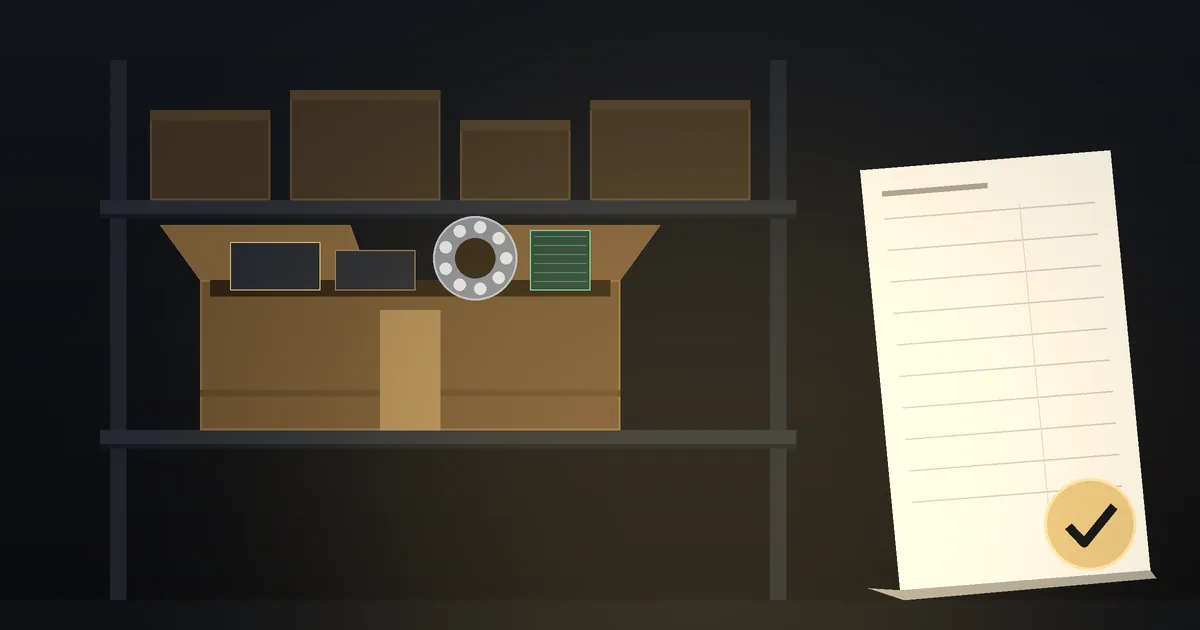
Can you send slow stock back to the supplier, or are you stuck with it? Often you can. Many distributor and dealer agreements include a return-to-vendor clause, usually called stock rotation, but it comes with a quota, a deadline and a list of conditions. Miss one of them and the return gets refused or credited at a fraction of what you paid.
What the rotation clause actually says
The wording varies by supplier, so treat this as a list of things to look for, not a standard. A typical clause covers:
- An allowance, as a percentage of your purchases over a period, often a year. Buy $60,000 at 5% and you may return up to $3,000 at cost.
- A window. Some suppliers allow one rotation a year, some two, some only in a set month. Outside the window the allowance may lapse.
- An offsetting order. Many agreements give credit only if you place a new order of equal or greater value at the same time.
- Original, unopened, resaleable packaging. A torn box or a price sticker can be enough to reject the line.
- Only current part numbers. Suppliers often refuse superseded or discontinued items, which is why supersessions deserve attention before rotation day.
- A credit price. Check whether you get back what you paid, the current price, or the lower of the two. Returns outside the allowance may carry a restocking fee.
We had the right to send it back the whole time. We just never read that part of the agreement.
So the allowance expires unused while the dead stock keeps costing money on the shelf.
Putting a dollar value on the allowance
Say you bought $60,000 from one supplier last year and the agreement gives you 5%. That is $3,000 of stock you can turn back into credit. If your carrying cost is 20% a year, holding that $3,000 of slow stock costs about $600 a year, and that is before any of it becomes obsolete.
Now the credit price. Suppose one returned item cost you $12.00 and the supplier has since cut it to $11.40. If the credit uses the lower of the two, you get $11.40 back and lose $0.60 a unit. On 50 units that is $30, which is small next to $600 of carrying cost, but it is worth knowing before you choose what to send.
A restocking fee moves the numbers more. A 15% fee on $1,000 returned outside the allowance means $850 of credit. That can still beat holding stock that will not sell for another two years.
Building a return the warehouse will accept
Start from your own sales data, not from what looks dusty. Rank SKUs from this supplier by months of stock on hand, then work down the list:
- Drop anything with damaged or opened packaging. Say that removes $400 of the $4,200 you hoped to return.
- Check every part number against the supplier's current price file. Anything missing or superseded comes out too, another $300 in this example.
- You now have $3,500 of eligible stock against a $3,000 allowance. Send the slowest $3,000 and keep the rest.
- Prepare the offsetting order from SKUs you need, so the credit lands on stock that sells.
- Ask for a return authorization before shipping anything, and keep the authorization number with the packing list.
Don't skip step 2. A part you bought two years ago may have been renumbered since, and the warehouse will not take a number it no longer stocks. If a line has vanished from the file entirely, read what to do when a supplier discontinues an item before you plan around it.
Asking for better terms next time
If you are a small account, the rotation clause is one of the few things you can negotiate without volume. A higher allowance, a second window or dropping the offsetting order each has a dollar value you can work out as above, and a supplier may give one more easily than a price cut. The levers a small account can pull include this one.
Put the terms in a note next to the supplier's name, with the window date in your calendar a month ahead. A spreadsheet is enough for that. Matching your stock against the current price file is the slower part: CostSentry matches supplier price lists to your Shopify catalog by SKU and flags items that have disappeared from a file, which tells you what not to put in the box.
Find the lines a new price list pushes below your margin
Load your Shopify product export and the supplier's latest CSV. The checker matches SKUs and lists the ones below your target margin. Read that list next to the return clause. Free, no account.
Open the free checker ↗